Showing posts with label Mandalay. Show all posts

Monday, December 22, 2014

Myanmar part 5 - Mandalay(2), continued

Mandalay surprised us...it was not like Mogok but there were a lot of rocks to see.

We visited some dealers, saw more pink tourmaline from pegmatites in the Mogok area
Also visited a couple of mineral shops, but didn't find anything to buy.
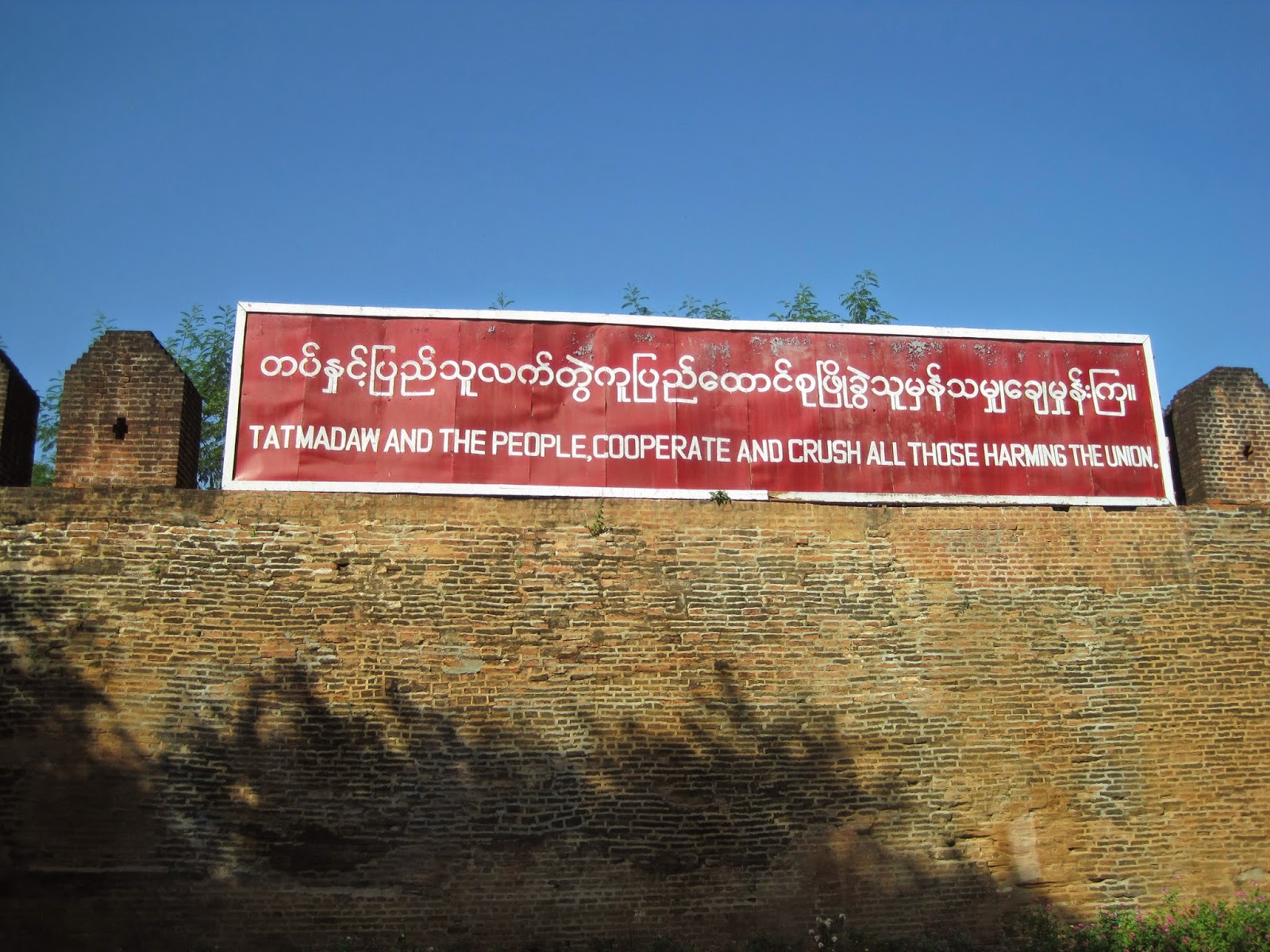
We still had a few important cultural sites to visit on our last day.  First stop was the  Royal Palace of Mandalay (with its intimidating warning sign).  This palace was the last home of the Burmese royal family. 
King Thibaw and Queen Supayalat. They were exiled by the British to Ratnagiri, India.  Thibaw died in India but the Queen and some of their daughters eventually returned to live in Burma, stripped of their royal titles.
The palace was built in 1857 by King Mindon and then mostly destroyed by Japanese bombs during World War Two.  Most of the buildings were made of wood and burned to the ground.  Using the original architectural plans, the government rebuilt the complex in 1990.  
The two white buildings are the only original buildings left.
Not far from the palace is a monastery that was built in the 1700s.  This is one of the few old wooden structures remaining in Mandalay.  They are at constant risk of fire damage.  This building is maintained by students from the Buddhist school across the street.
A close up of the elaborate carvings that decorate the walls of the monastery.
This is Kuthodaw Pagoda, which contains the world's largest book!
The book has 1460 "pages" or stone tablets.  There are 729 tablets each housed in a small stupa with a precious gem on the top.
The 729 stupas surround Kuthodaw Pagoda.  Inside each is a stone tablet
This is two pages (front and back) of Budhist scripture and all together they make the world's largest book.
We saw this statue inside of one stupa. This is a "fasting Buddha".
Our final activity in Mandalay was a half-day river cruise to Mingun.  Mingun is a tiny village about an hour upriver.  There are several interesting sites there.  The tour boats line the Irrawaddy riverfront along with the boats of fishermen, who live on the beach:

Approaching Mingun, you can see the massive ruins of the unfinished Mantalagyi Temple. It was built in 1790 by King Bodawpaya whose palace was Amurapura (just outside of Mandalay). If it had been finished, it would have been the largest temple in the world at nearly 500 feet tall.
There are no cars in Mingun, this is one of the few options for transporation.
Where are you going Edna?

There isn't really much inside Mantalagyi Temple, people like to climb to the top despite the "no climbing" signs posted everywhere.
The "No Climbing" signs are there for a good reason, earthquakes have severely damaged the structure.
Walking a short distance along a dirt road we arrived at Hsinphyumae temple, on of the most beautiful buildings we saw in Myanmar!  You come around a bend in the road and there it is in front of you, amazing. The design of this temple is based on Mount Meru, the mountain with five peaks that is at the center of the universe in Buddhist cosmology.
King Bodawpaya also built one of the world's largest bells, the Mingun Bell. Anyone can ring the bell, or stand underneath it if they wish.
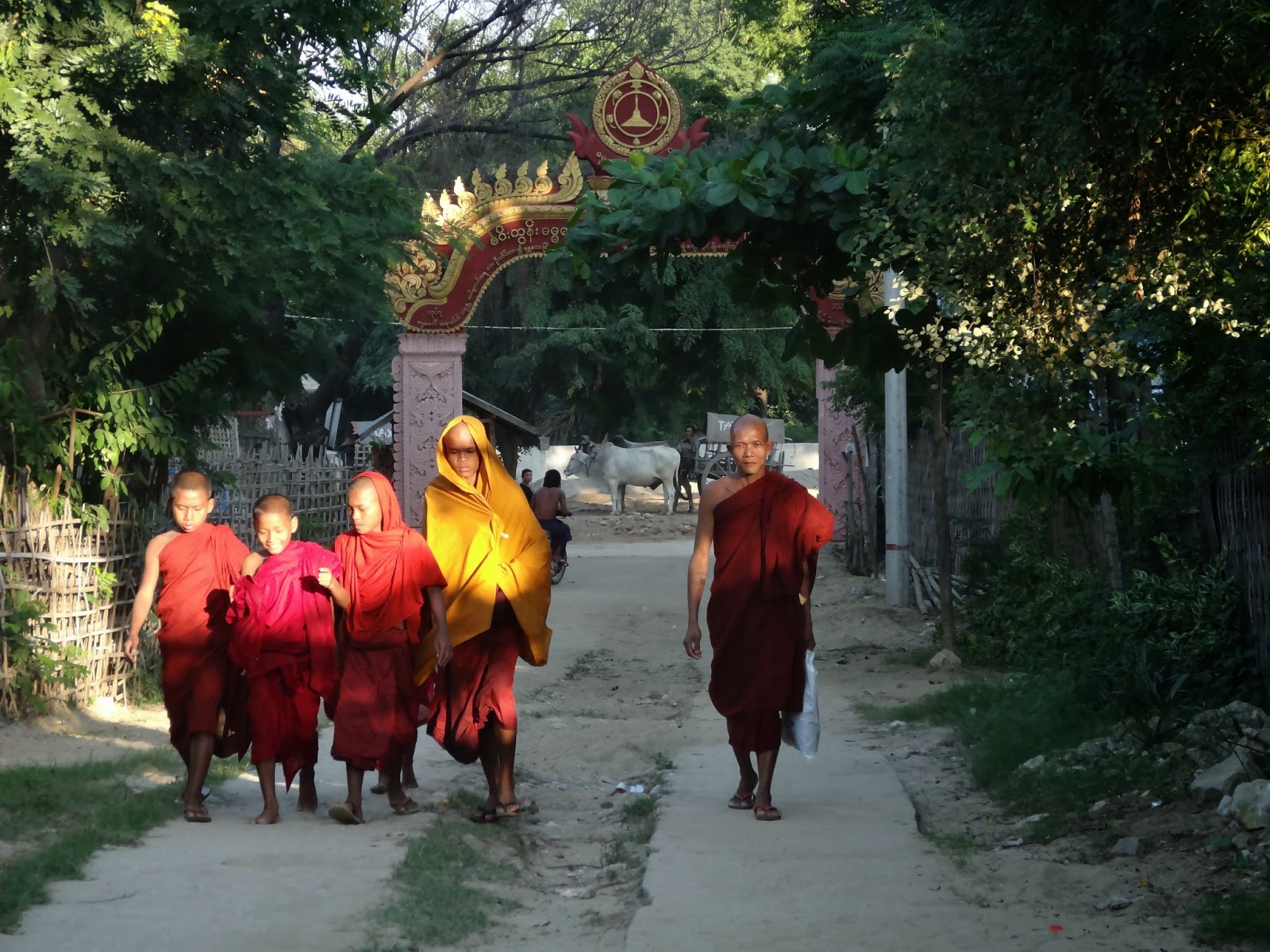
Mingun sights

Getting back on the boat.  Notice that the the handrail is two men holding a pole.
Cold beers on the boat to celebrate a lovely time in Mandalay.
 A final sunset over the Irrawaddy River

Wednesday, December 17, 2014

Myanmar part 4 - Mandalay (1), Capital City of the last Burmese Kings


We left Mogok and drove back through Pyin Oo Lwin (formerly Maymyo), which is something of a resort town. British soldiers stationed in Mandalay went there to escape the heat and humidity.  There is still a lot of British architecture as well as a very lovely park and botanical gardens.  


Orchid Garden at Pyin Oo Lwin

Mandalay is the second largest city in Myanmar after Yangon. After the British conquered Lower Burma and made Rangoon their capital, the Burmese King  moved his capital to Mandalay. In 1885 the British captured Mandalay and sent the King into exile. Mandalay now has a large population of immigrants from China, many hotels and businesses are Chinese-owned. There is also a direct road from Mandalay to Yunnan province choked with trucks shipping goods back and forth.


An important export for Myanmar is jade, and most of that jade goes directly to China. Mandalay's famous jade market was our first stop. It was hot, crowded, noisy and fascinating. 


These young men are cutting the jade into simple shapes:  slabs, disks, cylinders.  These are sold to China where they will be carved in finer detail.


Here is some betel nut for sale.  It is actually betel leaf and areca nut; both are stimulants and chewed like tobacco.  It stains teeth red and the dark red stains all over the ground are from people spitting out this stuff.  


Mandalay has wonderful arts and crafts.  This is a woodcarving shop.


Wooden marionettes, the bodies and clothing are all hand made.


Beaded tapestries and purses.


Weaving longis, the long skirts worn by both men and women.


Marble buddha statues.  The marble is from Myanmar but these statues are made to be shipped to China.  The faces require a master carver and will be finished later.


A young man working on a buddha statue.


So many buddhas.


This is very interesting.  The gold leaf that is applied to buddha statues and pagodas is mined in Myanmar.  In Mandalay it is layers between bamboo paper and pounded into thin sheets.  You find the gold for sale at the temples.


The gold leaf is pounded by men working in shifts and it is a bit of a production for the tourists.


This is Mahamuni temple, it contains a very ancient buddha statue that was stolen from Mrauk U in Rakhine State by King Bodawpaya.  The statue is believed to be around 2000 years old.  It is famous for a face-washing ceremony performed by monks every morning at 4:30 am.


Unfortunately we saw these signs a lot.  Women are not allowed into the most holy temples.  We were able to enter many of the temples in Bagan but in Mandalay we were frequently banned entering, or from entering certain areas within the temple.  Women cannot apply the gold leaf, touch a buddha statue, touch a monk, be higher than a buddha statue, or enter the large temples like Shwedagon in Yangon.


We wanted a picture of this gold encrusted buddha so we gave the camera to Tony.  Men can enter but they must be dressed modestly, Tony needed to cover up!


Buddha from outside, it has a knobbly texture from all the gold leaf.


Men applying more gold leaf to the statue.


At Mahamuni are several bronze statues originally stolen from Ankor Wat in Cambodia.  Bodawpaya brought them along to Mandalay.  People rub the statue on parts of the body that correspond to their own health problems.


At sunset we visited U Bein bridge over Lake Taungthaman.  This is the worlds longest teak footbridge.  It was a little wobbly but the view was gorgeous.

Sunset over the lake.